
A call to the bar ceremony is coming up, and you want to know what actually happens. Most law societies don’t publish a play-by-play, and forum threads only give you one person’s experience. This guide covers the sequence of events, how long to block off, whether family can attend, and where to find your exact date.
What Happens at a Call-to-Bar Ceremony (Step by Step)
Every provincial law society runs its ceremony a little differently, but the core shape is the same across Canada. Here’s what happens at a call to the bar ceremony, in order:
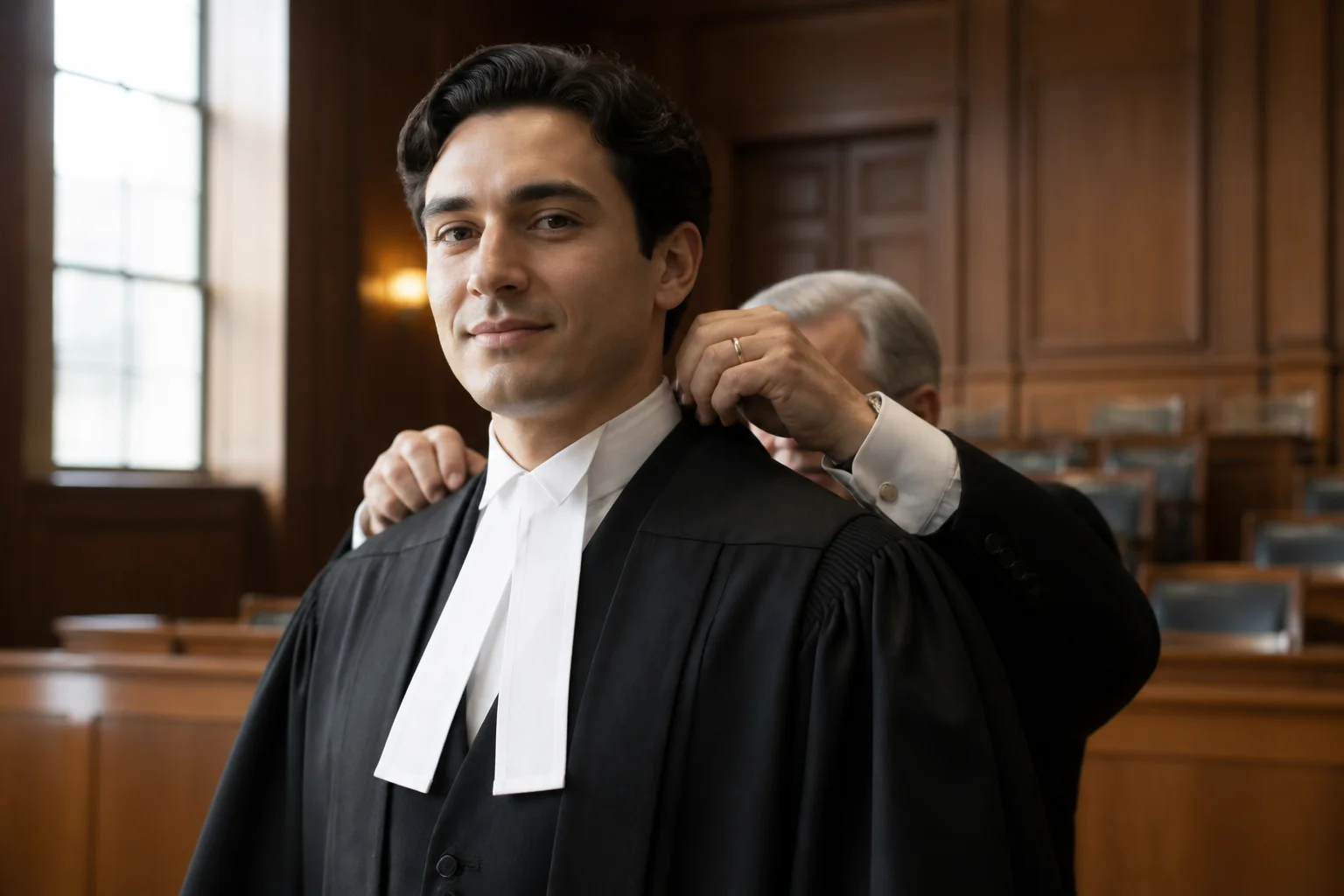
- Check-in and robing. Candidates arrive early, sign in, and put on their robes, waistcoats, and tabs before the ceremony starts. Many candidates get dressed at home and touch up in a robing room; others change on site.
- Seating and welcome remarks. Candidates are seated together, often by law school or articling group. A judge, bencher, or law society official opens the proceedings.
- The oath and roll call. This is the actual “call”: candidates take an oath or affirmation. Their names are read aloud, and each signs the Roll of Barristers and Solicitors for their province, the moment that legally makes someone a lawyer.
- Remarks from the bench. A sitting judge, and sometimes a senior lawyer or bencher, addresses the new class with a short speech. This is where the “call to the bar speech” search comes from. These remarks are usually well known within the profession, and law societies sometimes share them publicly afterward.
- Recognition and photos. New lawyers are formally welcomed, and there’s typically time afterward for photos with family and colleagues in the lobby or courtroom.
Called to the bar ceremony formats stay fairly consistent whether you’re being called in a courthouse, a convention centre, or a law society building. The robing, the oath, and the remarks are the constant. The venue is what changes.
How Long Does the Ceremony Take?
How long is the call to the bar ceremony? Plan for somewhere between one and three hours, depending on the size of the class being called. A smaller regional sitting might wrap in under an hour. A large provincial ceremony calling several hundred new lawyers can run closer to half a day, once you count arrival, robing, the ceremony itself, and photos after.
If you’re a guest rather than a candidate, arrive at least 20 to 30 minutes early. Seating fills up fast for the well-known sittings, and some venues lock the doors once the oath begins, out of respect for the proceedings.
Finding Your Call-to-Bar Date
Each provincial law society sets its own call to the bar dates, and they change every year. Treat any specific date you read online, including a “2025” or “2026” call date, as a starting point rather than a fixed fact. The most reliable way to confirm your date:
- Check your provincial law society’s website directly. The Law Society of Ontario, the Law Society of British Columbia, the Law Society of Alberta, and their counterparts each publish their own call schedule.
- Watch for the official notice from your articling principal or licensing program coordinator. Candidates are usually told their specific sitting date well ahead of time.
- If you’re searching for “call to the bar June 2025” or a similar month-specific query, confirm it against the current year’s published schedule. Sittings shift by a few weeks from year to year, so an old cached result can be wrong.
These dates move annually, so this page won’t try to pin one down for you. Check with your law society for the current year’s schedule, and bookmark their page rather than a third-party article.
Can Family and Friends Attend? Tickets and Seating
Yes. Family and friends are welcome at almost every call to the bar ceremony, and for most candidates it’s the whole point of inviting people. A few practical notes:
- Guest limits vary. Some law societies cap the number of guests per candidate because of venue capacity; others are open seating. Check your specific notice for a guest count.
- Call to the bar tickets aren’t usually sold. When a venue does require them, they’re free passes distributed to candidates ahead of time to hand out to their guests, not paid admission.
- Dress code applies to guests too, though it’s more relaxed than what candidates wear. Business or business-casual is the safe default for anyone attending as a guest.
FAQ
What is a call to the bar ceremony?
It’s the formal event where a law society admits new lawyers to practice, marked by an oath and the signing of the Roll. It’s the final, official step after finishing law school, articling, and the licensing process.
Is a call to the bar ceremony the same everywhere in Canada?
The core elements (oath, roll call, remarks) are consistent, but each provincial law society sets its own venue, schedule, and guest policy.
What’s the “call to the bar speech”?
It’s the address given by a judge or senior bencher during the ceremony, usually to the whole new class rather than one candidate. Some law societies post these publicly afterward.
Do I get a call to the bar certificate?
Most law societies issue a certificate of call, either handed out at the ceremony or mailed shortly after, confirming the date you were admitted to practice.
Is there a “called to the bar” podcast?
A few Canadian legal podcasts have covered the call-to-bar experience as episode topics, usually featuring recently called lawyers talking through what the day was like. Worth a search if you want first-hand accounts beyond this page.
Gift Ideas for Someone Being Called to the Bar
If you’re a family member or friend attending someone’s call to the bar, you might be wondering what to bring besides a card. Our guide to call-to-bar gift ideas covers practical, well-priced options for the new lawyer in your life. Many double as something they’ll use in their first year of practice.